Most of Europe's famous wine regions exist because the land underneath them could not grow anything else profitably. Hear me out. Bordeaux's gravel, Burgundy's limestone slope, Champagne's chalk, Alentejo's warm plain east of Évora — these are not neutral surfaces where a vineyard replaced a forest. They are geographies that selected for the vine centuries before "environment" was a column on a balance sheet. Any audit of whether vineyards are bad for the environment has to start there, with the land the vine actually occupies, not with the vine as an abstract crop.
Methodology
We took four regions we draw often — Bordeaux between the Garonne and the Dordogne, Burgundy along the Saône, Champagne on the chalk north of the Marne, and Alentejo on the warm plain east of Évora — and asked a narrow question: what does the vine do to the ground it stands on, compared with what else that ground could plausibly carry?
We did not try to produce a continent-wide verdict. We did not model emissions down to the gram, and we did not run water balances we cannot defend. Where a figure is broadly established — a river basin, a sub-zone, a historical anchor town — we used it. Where a figure would be precise-and-wrong, we wrote around it. A vintage misstated in a wine piece erodes everything else on the page, so our instinct here was to stay general when the public record is thin.
The lens is geographic, not oenological. We compared regions on four axes: the land's agricultural alternative, the slope's behaviour under rain, the water the vine draws relative to its river, and the chemical load its climate forces onto the row. That is a cartographer's audit, not a chemist's.
Finding #1: Monoculture Is a Geographic Choice, Not a Universal Rule
The sharpest charge against vineyards is monoculture: a single crop over a continuous landscape, with the biodiversity collapse that implies. The charge lands differently in each of our four regions, because the land underneath carries different alternatives.
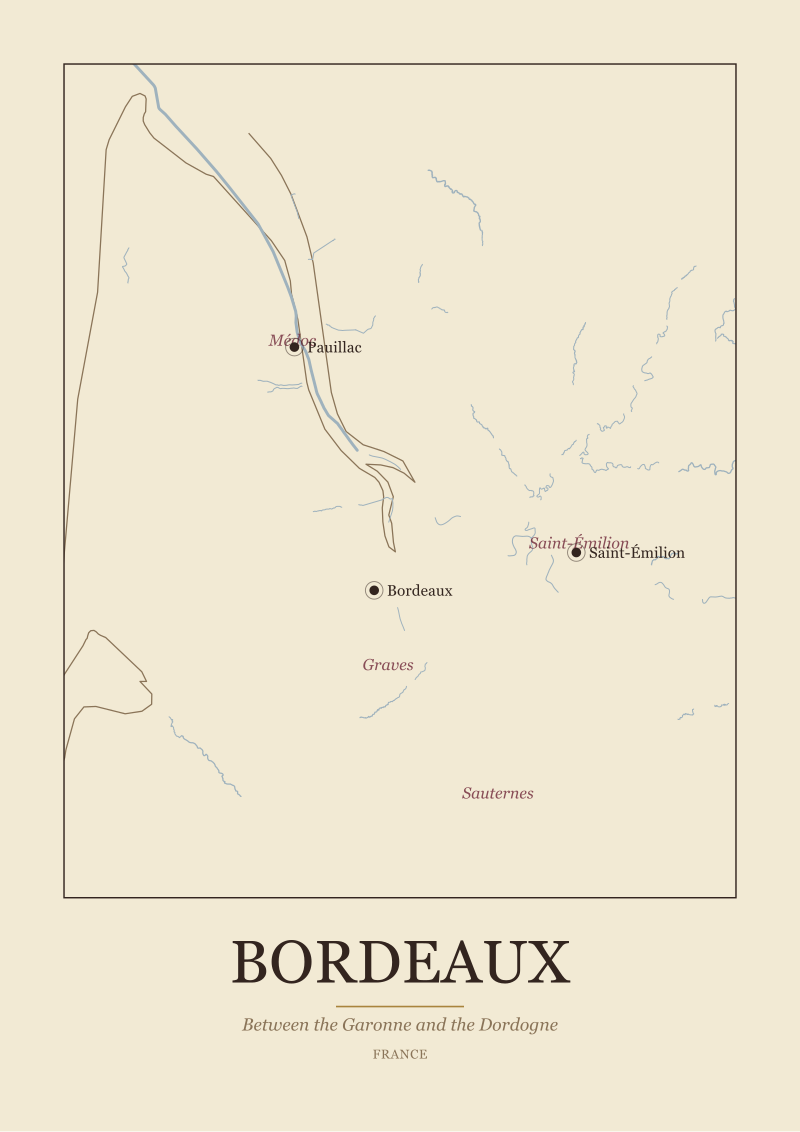
In the Médoc, on Bordeaux's left bank, the gravel pushed up by the Garonne is poor for cereals and worse for pasture. It drains so hard that most food crops burn by August. A hectare of Médoc gravel removed from vine does not revert to wheat; in the historical record it reverts to pine scrub and heath, as much of the surrounding Landes already is. The monoculture framing imagines the vine replacing something richer. On this specific gravel, that something is mostly not there.
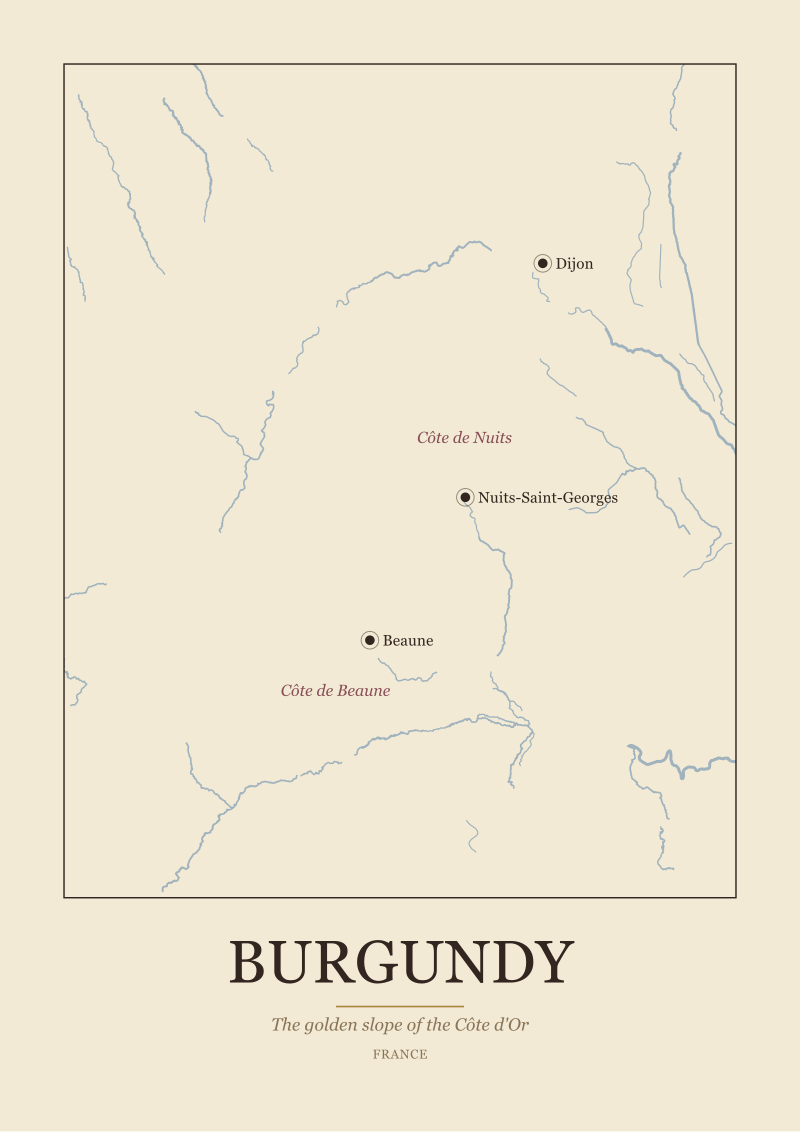
Burgundy's Côte d'Or runs the other way. The limestone slope between Dijon and Beaune is a narrow ribbon — a few kilometres wide at most — pressed between the plain of the Saône and the plateau above. On the plain, cereals and dairy work. On the slope, the vine is the economic use that keeps the hillside in cultivation at all. The monoculture here is a line, not a sheet; walk a kilometre east and the fields change crop every few hundred metres.
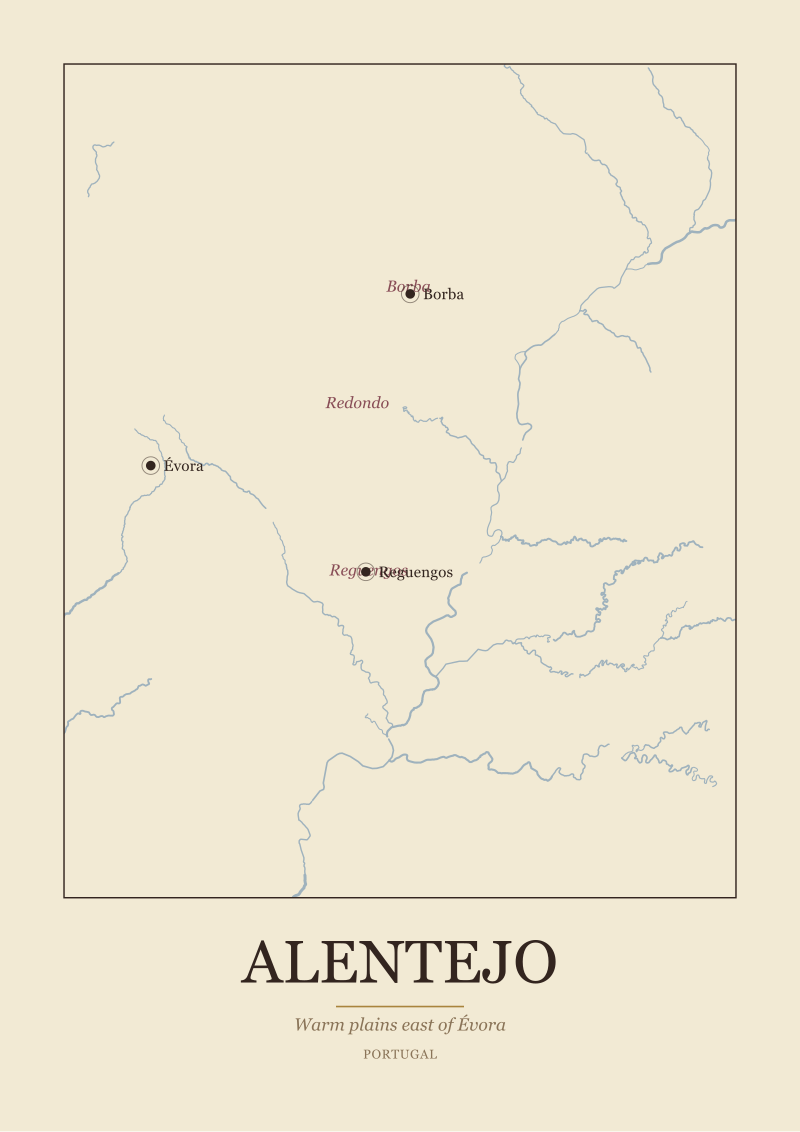
Champagne's chalk tells a third version. The chalk itself is agriculturally thin — pastoral land, forest, and vine have alternated on it for centuries. Alentejo, by contrast, is the one place in our four where the vine sits inside a genuine mixed landscape: cork oak, olive, cereal, and vine share the plain around Évora, Reguengos and Borba. Call the Alentejan vineyard a monoculture only if you have not looked at the montado around it.
 Bordeaux
The print from this article · from €29.95
View the print →
Finding #2: The Slope That Makes the Wine Also Protects the Soil
Erosion is the second charge. Vine rows, especially trained vertically up a hillside, are often cited as a soil-loss machine. The geographic answer depends almost entirely on what the slope was already doing without the vine.
The Côte d'Or is the honest test case. The golden slope faces broadly east, catching morning sun and shedding afternoon storms. Without a crop, that limestone slope loses soil to winter rain regardless; the rendzina soils that make Burgundy famous are thin precisely because the slope is a slow conveyor belt moving material down toward the Saône plain. The vine, with its deep root system and permanent canopy, slows that conveyor rather than accelerating it. The erosion debit on Burgundy's slope is not zero. It is also not larger than the debit the slope ran before anybody planted it.
Bordeaux's left bank is almost flat. The Médoc's gravel terraces step down toward the Gironde estuary in metres, not degrees. Erosion on that terrain is a drainage story, not a slope story — the question is what leaves the soil in dissolved form, which we come back to in Finding #4.
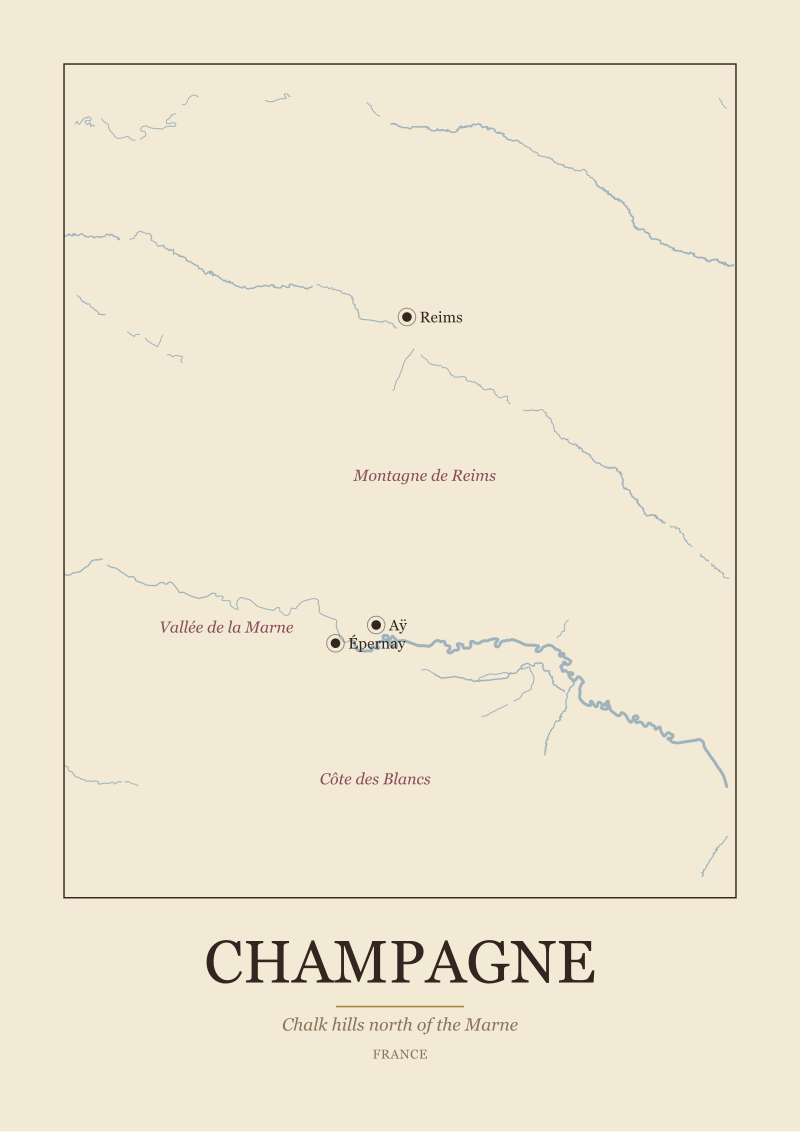
Champagne's hills north of the Marne are the exception that confirms the geography. The chalk slopes of the Montagne de Reims and the Vallée de la Marne are steep enough that erosion is a real line item, and the region's historical response — grassed inter-row, hedged plot borders along the Côte des Blancs — reads as a slope-management system, not a tasting-note flourish. The vine did not invent the slope; it adapted to it.
Finding #3: Water Pressure Varies by River, Not by Industry
"Vineyards use too much water" is a sentence that only means something once you name the river. Our four regions sit on four very different hydrological systems, and the water audit changes with each.
The Marne, the Saône, and the Garonne are northern-European rivers in temperate basins. Rainfall across Champagne, Burgundy and Bordeaux generally arrives in the growing season at levels the vine can live on without supplemental irrigation; traditional practice across all three has treated irrigation as either forbidden by appellation rules or unnecessary by climate. The vine's water footprint on these three systems is close to the rainfall footprint, which is to say it does not meaningfully compete with urban or industrial draw from the Garonne at Bordeaux or the Marne at Épernay.
The Guadiana, which drains Alentejo, is a different river. It is a southern-Iberian system, shared with Spain upstream, with a pronounced summer low. Agriculture on the Alentejan plain — vine, olive, almond, and others — exists in a basin that is already water-stressed in dry years. Here the vine does compete, not with industry but with other crops and, in acute years, with municipal supply. The honest reading is that Alentejo's vineyard sits inside a water system where every hectare of any irrigated crop is a political question, and the vine is not exempt from that question.
The pattern: in temperate northern basins, the vine's water draw is largely incidental. In Mediterranean basins with summer deficits, it is not. "Vineyards" is not the right unit of analysis. The river is.
 Alentejo
The print from this article · from €29.95
View the print →
Finding #4: The Chemical Footprint Lives in the Climate, Not the Vine
The chemical story — fungicides, herbicides, copper, synthetic treatments — is the one most people mean when they ask the headline question. Here the geographic lens actually clarifies more than the agronomic one.
A vine in a wet, maritime climate carries a heavier chemical load than a vine in a dry, continental one, and the reason is fungal pressure. Bordeaux, open to the Atlantic by way of the Gironde, runs humid enough through the summer that mildew is a near-annual threat; the historical record of copper sulphate — the "Bordeaux mixture" — begins on exactly these vineyards for exactly that reason. The chemical ledger in the Médoc is a function of the maritime climate first, the vine second.
Burgundy's Saône corridor is drier and more continental; its chemical pressure sits lower on average than Bordeaux's, though wet years narrow the gap. Champagne, further north and on chalk that drains hard, runs its own humidity profile — enough fungal pressure to matter in cool damp years, especially in the Vallée de la Marne. Alentejo is the dry end of the spectrum: hot, continental summers that suppress mildew but open a different front — insect pressure and sunburn — that triggers different interventions.
The transferable finding: the chemical cost of a vine is largely the chemical cost of the climate it sits in. Reduce a vineyard's chemical load by moving it to a dry climate and you have mostly moved the problem into a water problem, as Finding #3 shows. The ledger does not disappear; it changes column.
| Region | River basin | Dominant soil / landscape | Likely alternative use | Primary environmental pressure |
|---|---|---|---|---|
| Bordeaux (Médoc) | Garonne / Gironde | Gravel terraces | Pine scrub, heath | Maritime fungal load → chemicals |
| Burgundy (Côte d'Or) | Saône | Limestone slope | Hillside pasture or scrub | Slope erosion (pre-existing) |
| Champagne | Marne | Chalk hills | Forest, pasture | Slope + humidity in wet years |
| Alentejo | Guadiana | Warm plain, montado mosaic | Cork, olive, cereal | Summer water stress in dry years |
What This Does NOT Prove
This audit does not say vineyards are good for the environment. It says that the question collapses when you ask it generically. A vine on Médoc gravel is a different environmental proposition from a vine on the Côte d'Or slope, which is different again from a vine on Champagne chalk or on the Alentejan plain. Any sentence that begins "vineyards are…" and ends with a verdict is doing geography a disservice.
We also did not measure what we could not stand behind: carbon per bottle, glyphosate per hectare, embodied water in packaging and shipping, biodiversity indices across sub-zones. Those are real numbers, held by regulators and research institutes, and they belong in a different kind of audit than this one. What we can defend is the geography: the river, the slope, the climate, and the agricultural alternative on the same patch of ground.
The Takeaway
Vineyards are not bad or good for the environment in the abstract; they are specific to the land they occupy, and the honest audit is one region at a time. The next question is not whether the vine should be there, but what the map would carry if it were not — and whether that alternative is better reading of the ground.
FAQ
Which of these four regions has the heaviest environmental footprint?
By our geographic lens, Bordeaux's maritime climate forces the highest chemical load across the four, driven by Atlantic humidity and persistent fungal pressure in the Médoc and Saint-Émilion. Alentejo carries the sharpest water-stress exposure through the Guadiana basin in dry summers. The two pressures are not comparable in the same unit, which is exactly the point — "footprint" is not one number, it is at least two, and they live on different rivers.
Is organic viticulture a straightforward environmental improvement in these regions?
The honest answer is: it depends on the climate the vine sits in. In Alentejo, hot dry summers suppress fungal pressure and make lower-chemical regimes more tractable. In Bordeaux's maritime belt, the same regime demands more copper, more passes through the row, and more fuel — a different cost column, not a free one. Organic as a label travels better than organic as a universal environmental verdict.
Would these hillsides be better for the environment as forest instead of vineyard?
For Burgundy's Côte d'Or and Champagne's chalk slopes, the historical record shows alternation between forest, pasture and vine on the same ground over centuries, so "forest instead" is not a hypothetical — it has existed. The slope erodes under both regimes; what the vine adds is permanent root structure and a managed canopy. Whether forest is "better" depends on whether you weight biodiversity, carbon stock, or soil retention, which are three different audits.
Does appellation law protect the environment or just the wine?
Appellation rules in Bordeaux, Burgundy and Champagne regulate yields, varieties, and in many cases irrigation and planting density. Those rules exist to protect wine identity, but their geographic effect is to cap the intensity of cultivation on a given hectare. A yield ceiling is not an environmental policy in intent, but it functions as one in practice by limiting how hard the land is pushed. The border on the map is doing more environmental work than its original purpose suggests.
How does Alentejo's montado landscape change the monoculture question?
The montado — the mixed cork-oak, olive, cereal and pasture mosaic around Évora, Reguengos and Borba — means an Alentejan vineyard typically sits inside a varied landscape rather than replacing it wholesale. That changes the biodiversity math meaningfully compared with a continuous vine monoculture elsewhere. It does not resolve the water question through the Guadiana basin, which operates on a different axis entirely, but it does mean "monoculture" is the wrong word for most Alentejan vineyard geography.
Why not compare these regions to New World wine regions on the same axes?
Because the geography is not comparable without a lot more homework than we did here. California, Mendoza, Barossa, Marlborough — each sits on a river system, a slope, and a climate that would need the same four-axis audit before any transfer of findings is honest. We draw European regions, so we audited European regions. Extending the lens is a longer piece of work, and we would rather do it slowly than badly.
New regions and 10% off your first print.
One email now with your code. No noise after.